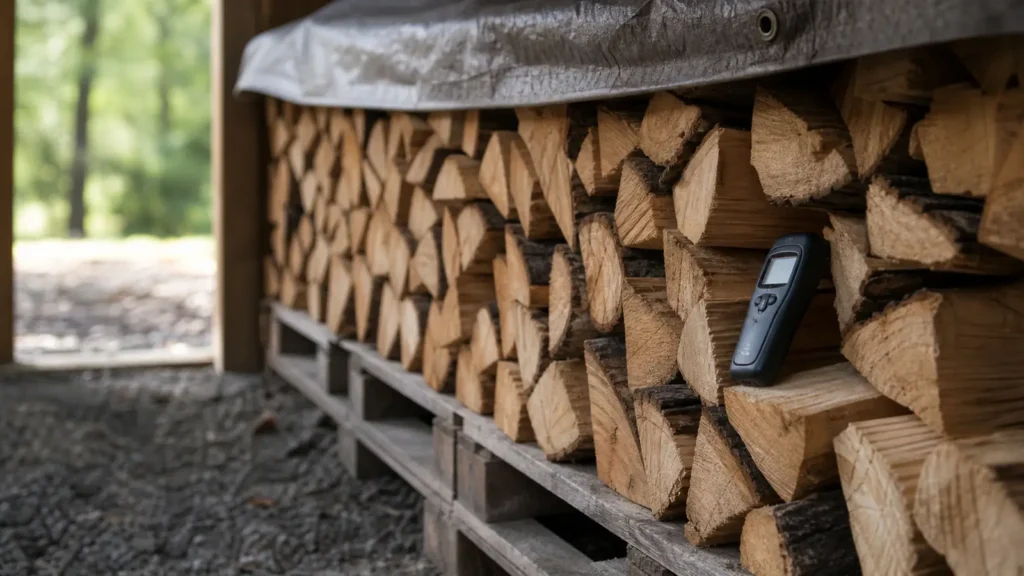
Dry wood is the single biggest factor in a clean, hot fire. Wet wood wastes heat boiling off water, makes more smoke, and builds creosote in the chimney.
On this page
The target: under 20%
The EPA says wood burns best at a moisture content below 20% and recommends checking with a wood moisture meter before burning (EPA). EPA’s 2020 moisture-meter flyer puts basic meters at about $15–$40 (EPA flyer).
How to season
Following EPA guidance (EPA):
- Split it. Pieces 6 inches across or smaller dry faster.
- Stack it off the ground, split side down.
- Cover only the top. Covering the sides traps moisture.
- Wait. At least 6 months for softwood and at least 12 months for hardwood.
How to test
- Take a piece from the middle of the stack.
- Split it and test the freshly split face, not the weathered outside.
- Push the meter’s pins in along the grain and read the result.
- If it reads 20% or less, it’s ready. If not, give it more time.
Signs of seasoned wood, per EPA: it’s darker, weighs less, and sounds hollow when knocked against another piece (EPA). A meter is more reliable.
Why wet wood costs you heat
Water in wood has to boil off before the wood burns well. That energy goes up the chimney instead of into the room, and the cooler, smokier fire leaves more creosote in the flue. The EPA warns that burning wet wood produces more smoke and less heat and advises burning only dry, seasoned wood (EPA). It’s also why the heat values in our firewood BTU chart are given for air-dried wood: green wood delivers noticeably less.
A seasoning timeline
| When | What to do |
|---|---|
| Late winter or spring | Buy or cut next winter’s wood. Split it right away. |
| Spring | Stack off the ground on pallets or rails, in a single row, in sun and wind. Cover only the top. |
| Summer | Leave it. Air flow through the stack does the work. |
| Early fall | Test a few pieces from the middle of the stack with a moisture meter. |
| Winter | Burn the driest wood first. Bring a few days’ worth indoors so it’s at room temperature. |
EPA guidance is at least 6 months for softwood and at least 12 months for hardwood (EPA). Dense woods such as oak often need the longer end of that range; that is general guidance, and a meter reading is what tells you the wood is ready.
Buying “seasoned” firewood
“Seasoned” isn’t a regulated term in most places, so check before you pay:
- Ask when it was cut and split. Wood split last month isn’t seasoned.
- Test a few pieces on delivery. Split one and read the fresh face. Under 20% is the EPA target.
- Measure the volume. A full cord is 128 cubic feet stacked (4 × 4 × 8 ft). A face cord or rick is one row of a given log length and varies by seller.
- Price it by heat, not volume. The firewood cost calculator converts price, volume and species to cost per million Btu.
Some states also restrict moving firewood to slow invasive insects such as the emerald ash borer. Buy local, and check your state agriculture or forestry agency’s rules before hauling wood across county or state lines.
Storing wood once it’s dry
- Keep the woodpile away from the house walls; it can hold moisture and pests.
- Keep the cover on the top only, so rain stays off and air still moves.
- A small indoor rack keeps a day or two of wood dry and warm, but don’t store wood within the stove’s clearances.
FAQ
Can I burn wood that reads 25%?
Not yet. It will burn, but not cleanly, and it builds creosote faster. Give it more time to dry; the EPA advises burning only dry, seasoned wood.
Does kiln-dried firewood need seasoning?
Kiln drying is meant to bring wood below 20% quickly. Test it anyway; storage after kiln drying can let it pick up moisture again.
Common moisture-meter mistakes
- Reading the outside of a log. The surface dries first and reads low. Always split and read the fresh face.
- Reading across the grain. Most pin meters are designed to read with the pins along the grain; follow the meter’s instructions.
- Reading frozen or very cold wood. Readings on frozen wood can be off. Let a piece warm to room temperature first.
- Testing one piece. Test three to five pieces from different parts of the stack and go by the wettest.
What not to burn
Never burn trash, painted or treated wood, or wet wood. They pollute, damage catalysts and foul chimneys.
Sources
- EPA, Best Wood-Burning Practices: https://www.epa.gov/burnwise/best-wood-burning-practices
- EPA, Energy Efficiency and Your Wood-Burning Appliance: https://www.epa.gov/burnwise/energy-efficiency-and-your-wood-burning-appliance
- EPA, Test Your Wood with a Moisture Meter (flyer): https://www.epa.gov/sites/default/files/2020-11/documents/moisturemeter_flyer_02112020_v1_d35_print_opt.pdf