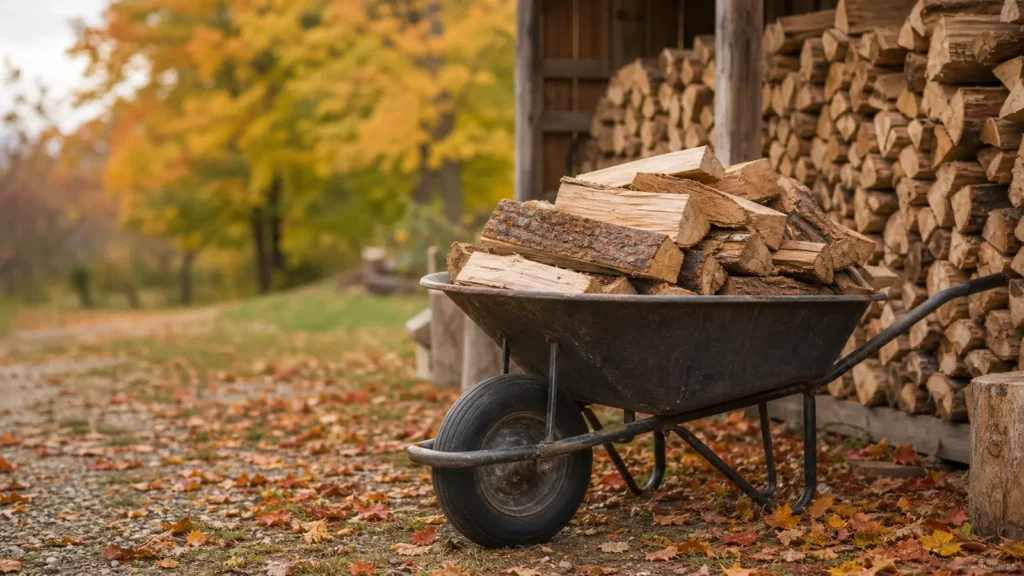
Good wood makes the biggest difference to how a stove burns.
- Firewood BTU by Species Chart
- How to Season Firewood and Check Moisture
- Wood Stove Accessories Worth Having
The short version
- Dry wood is the biggest factor. The EPA’s target is under 20% moisture, checked with a moisture meter on a freshly split face. Season softwood at least 6 months and hardwood at least 12. See how to season firewood.
- Price wood by heat, not volume. A cord of white oak holds about 29.1 million Btu; a cord of cottonwood about 15.8 (USU Extension). The firewood BTU chart lists 15 species, and the firewood cost calculator turns your price into cost per million Btu delivered and compares it with propane, oil, gas and electricity.
- Check the volume. A full cord is 128 cubic feet stacked (4 × 4 × 8 ft). Face cords and ricks vary.
Buying firewood checklist
- Ask when the wood was cut and split.
- Split a piece on delivery and test it with a meter.
- Measure the stack.
- Work out the cost per million Btu, not just per cord.
- Buy local; many states restrict moving firewood to slow invasive insects.
Storing it
Stack it off the ground, split side down, in a single row where sun and wind reach it, with the top covered and the sides open. Keep the pile away from the house walls, and keep indoor wood outside the stove’s clearances.
What not to burn
Never burn trash, painted or treated wood, plywood or particleboard, or wet wood. They pollute, damage catalysts and foul chimneys (EPA).
Useful gear
A pin-type moisture meter is the one accessory we’d call essential; see wood stove accessories for the rest, including ash safety.
How firewood is legally sold
A cord is defined by law as 128 cubic feet of wood stacked compactly, such as 4 × 4 × 8 ft. NIST’s consumer fact sheet says firewood can only be sold by the cord or by fractions of a cord, and warns that terms such as “face cord,” “rack,” “pile” or “truckload” have no legal meaning, so you can’t tell how much you’re getting. If a load looks short, stack it tightly, measure width × height × length, and contact your state’s weights-and-measures office (NIST, Buying Firewood). [Check your state’s adoption; rules vary.]
Don’t move firewood
Insects such as the emerald ash borer travel in firewood, and many states and federal quarantines limit moving it. Buy wood near where you burn it, or buy certified heat-treated wood if you have to transport it (Don’t Move Firewood).
Hardwood or softwood?
Both work. Dense hardwoods hold more heat per cord, so a load lasts longer. Softwoods light easily, dry faster and are fine for spring and fall fires. Dry wood matters more than species. The BTU chart shows the trade-off in numbers.
Cost per million Btu, worked
Divide the price of a full cord by the million Btu per cord. For a hypothetical $300 cord, white oak (29.1 million Btu, USU Extension) works out to about $10.31 per million Btu, and cottonwood (15.8) to about $18.99. That’s before stove efficiency. The firewood cost calculator adds that step and compares the result with other fuels. Use your real local price; this example price isn’t a market average.
About moisture meters
EPA’s moisture-meter flyer puts a basic meter at $15 to $40 and says to test a freshly split face by pushing the probes into the grain (EPA flyer, 2020). Read below 20% before you burn.
General information. For installation, follow your stove’s listed manual, NFPA 211 and your local code official, and consider an NFI-certified installer.
All firewood guides
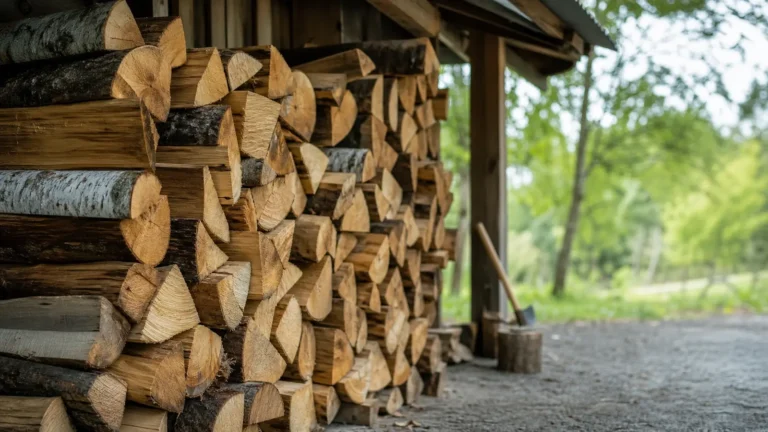 FirewoodFirewood BTU by Species Chart (and Cost per Million BTU)Heat per cord for common firewood species from university extension tables, plus how to work out what you pay per million BTU.
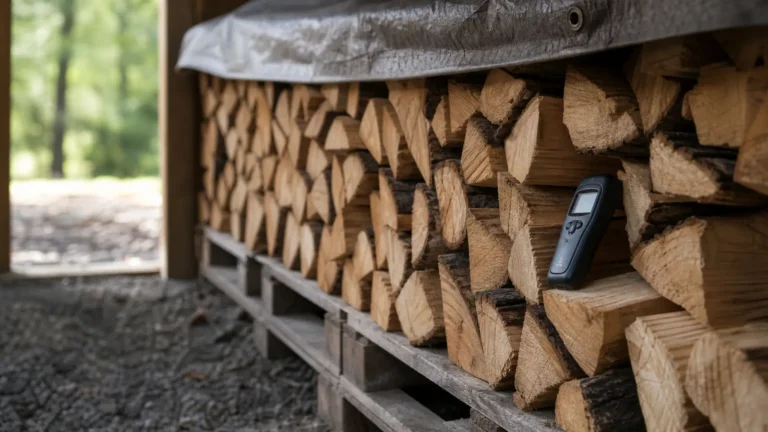 FirewoodHow to Season Firewood and Check MoistureHow long to season firewood, how to stack it, and how to test it with a moisture meter for a reading under…
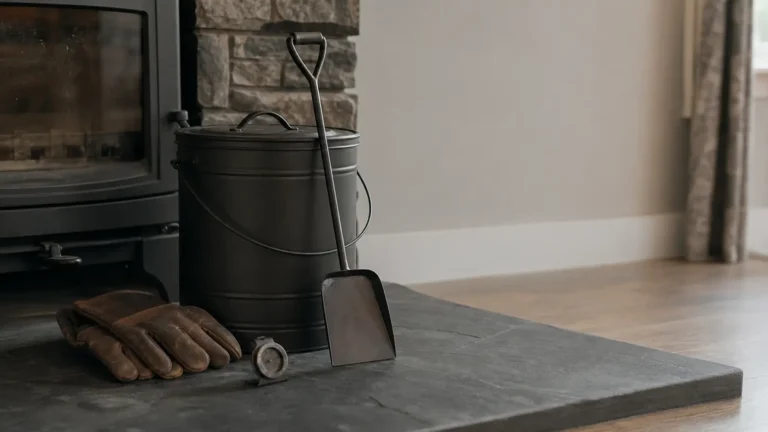 FirewoodWood Stove Accessories Worth HavingWhich wood stove accessories actually help: a moisture meter, a stove or flue thermometer, smoke and CO alarms, ash tools and gloves,…